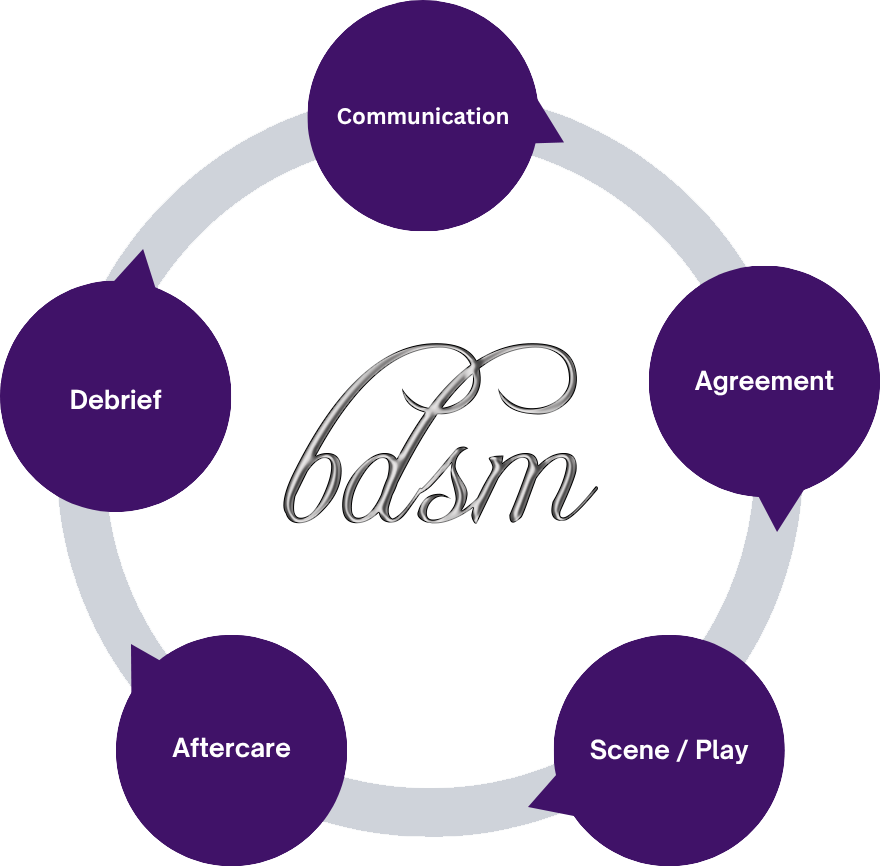
- Communication:
Both partners sit down and talk about what they would both like and enjoy out of the scene. They discuss things that are off limits, and safety measures that need to be put into place to ensure all participants are safe.
- Agreement:
All parties agree to what is on and off limits for the scene/play/training in advance, and ensures everyone is aware of the safety protocols when a threshold is crossed.
- Scene/Play:
This is the time where the participants engage in the activities which were previously discussed and agreed upon, stopping if, at any time, a participant engages the safety protocols.
- Aftercare:
After a scene, participants can be physically, mentally, and/or emotionally drained. Cuddling and relaxing, decompressing, or talking can give them a chance to reconnect as they come down from the scene. See: aftercare
- Debrief:
When participants are ready, they can sit down and discuss what they enjoyed about the scene, what did not work, and how they can improve for future scenes together.
|
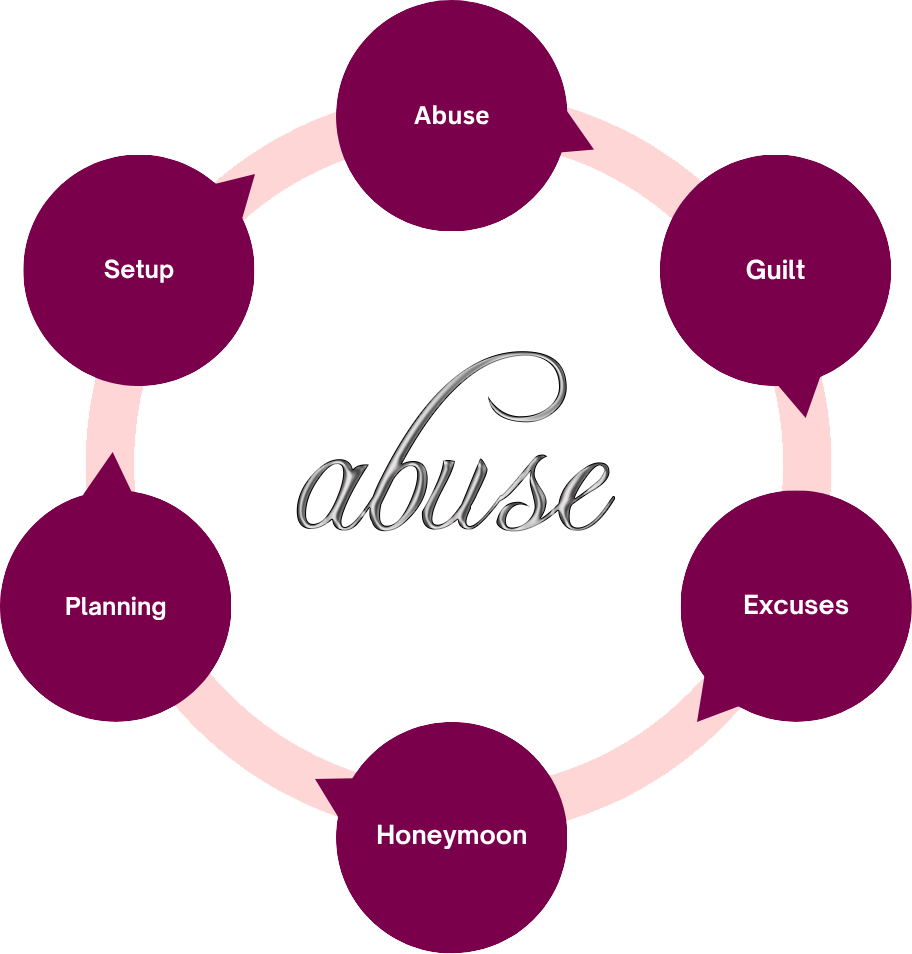
- Abuse:
One person commits an act of physical, verbal, or emotional harm against another person without their willing consent or agreement.
- Guilt:
The abuser becomes worried about being caught, losing their victim, and/or potential consequences of their actions.
- Excuses:
The abuser will shift blame, make excuses, and rationalize their behavior in any way possible to avoid taking blame for the act of abuse.
- Honeymoon:
The abuser becomes a reasonable partner, doing the things the victim has always wanted them to do. This is done to ensure the victim stays in the relationship, and is often an attempt to buy forgiveness and excuse the abuse.
- Planning:
The abuser starts feeling a loss of control and begins planning ways to regain said control.
- Setup:
The abuser creates a situation, or waits for a situation which allows their abuse to be justified.
|
- The use of bodily sensations to enact pleasure
- A form of consensual power exchange where each participant is empowered
- A situation where all parties have negotiated and come to a mutual agreement before anything happens
- A partnership that creates, relies upon, and continually builds trust
- A relationship designed to help fulfill the desires of each person in a safe, controlled environment
- A communication environment where feelings, preferences, thoughts and emotions can be shared freely and openly
- Contains rules, boundaries, and limits that must be respected at all times, including strict safety measures to ensure none are crossed
|
- A way to cause physical, mental or emotional damage or harm to another person
- A means to take away another person's power, or to deny the individual's role of equality
- A situation where not everyone knows what, when, or why something will happen, and there is no negotiation, or agreement for it to occur
- A one-sided act that damages and destroys trust
- A cruel and often violent treatment of another person
- An environment without communication or support, often controlled through fear and threats
- Abuse violates the law; there are no rules, limits or boundaries, and there is no safety measures, often showing minimal or no respect for the victim
|